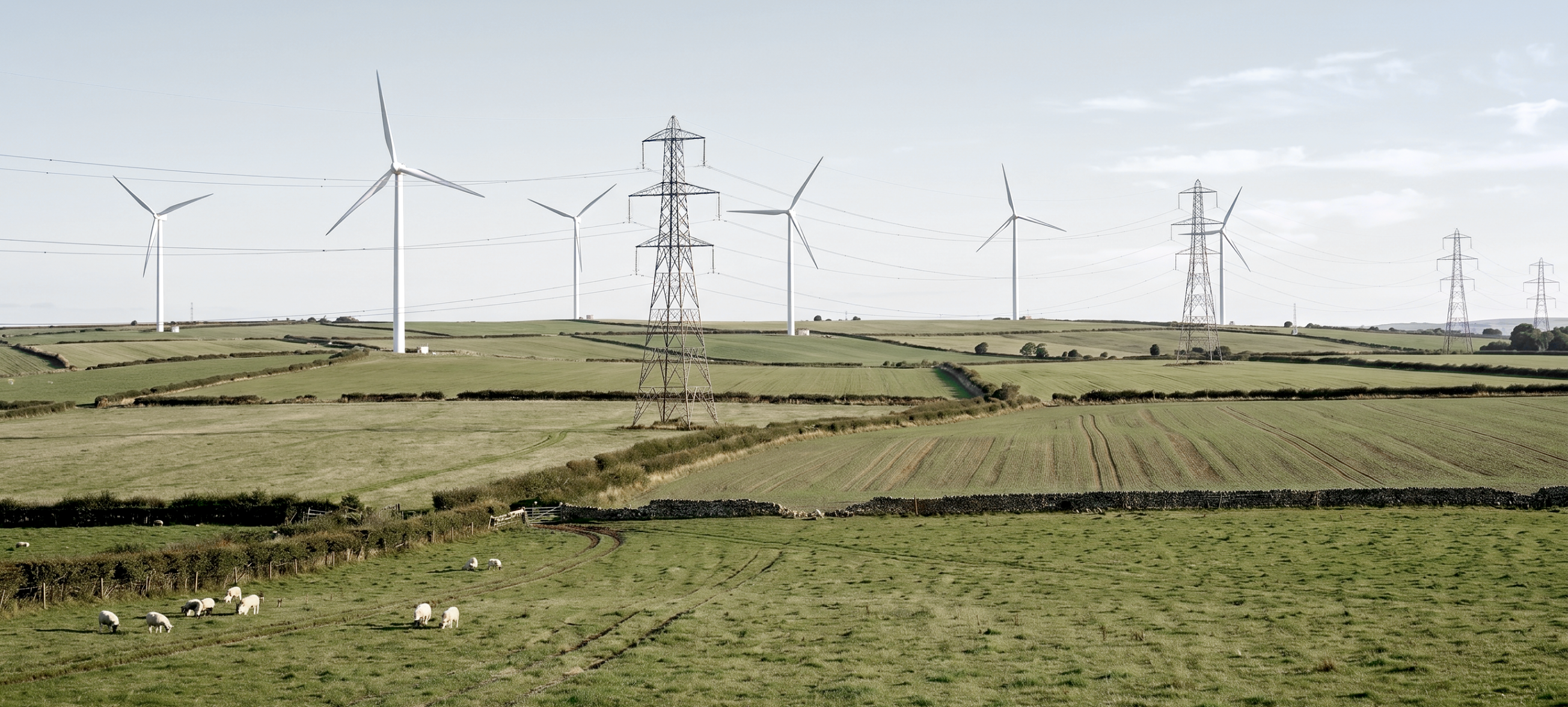
A Market Under Pressure – and a Strategic Opportunity
Conversations at the LAMMA Show and during our East Anglia farm cluster meeting earlier this year made clear that interest in wind development is growing – and that the questions landowners are asking are increasingly strategic rather than exploratory.
Across the UK, farmers are operating in an environment of margin pressure and policy change. Developers are actively seeking suitable rural sites and, for many landowners, hosting a turbine is increasingly becoming a long-term business decision.
Five key reasons explain why more farmers and landowners are exploring wind development.
Five Reasons Landowners Are Exploring Wind Development
1. A Direct Contribution to UK Energy Security and Net-Zero Targets
Ongoing global instability has highlighted the risks associated with reliance on imported energy, increasing focus on strengthening domestic generation. Wind is now the UK’s largest source of renewable electricity.
In 2024, wind power generated approximately 29% of total UK electricity, with onshore wind contributing around 12% and offshore around 17%. Overall, renewables supplied just over half of UK electricity generation.
For landowners, hosting a turbine represents a practical contribution to reducing reliance on imported fossil fuels and supporting a more resilient energy system.
Onshore wind is now central to the UK’s energy system, and landowners are playing a direct role in that transition.
2. Reliable, Long-Term Income in Uncertain Times
Wind turbine leases typically run for 25+ years, providing long-term, index-linked income that is independent of agricultural commodity markets, input costs and agricultural policy reform. Depending on site characteristics such as wind resource and grid access, annual payments can reach substantial five- or six-figure sums per turbine.
For many landowners, this isn’t just about renewable energy; it’s about strengthening the long-term resilience of the farm business. Stable revenue can support reinvestment, succession planning and long-term resilience.