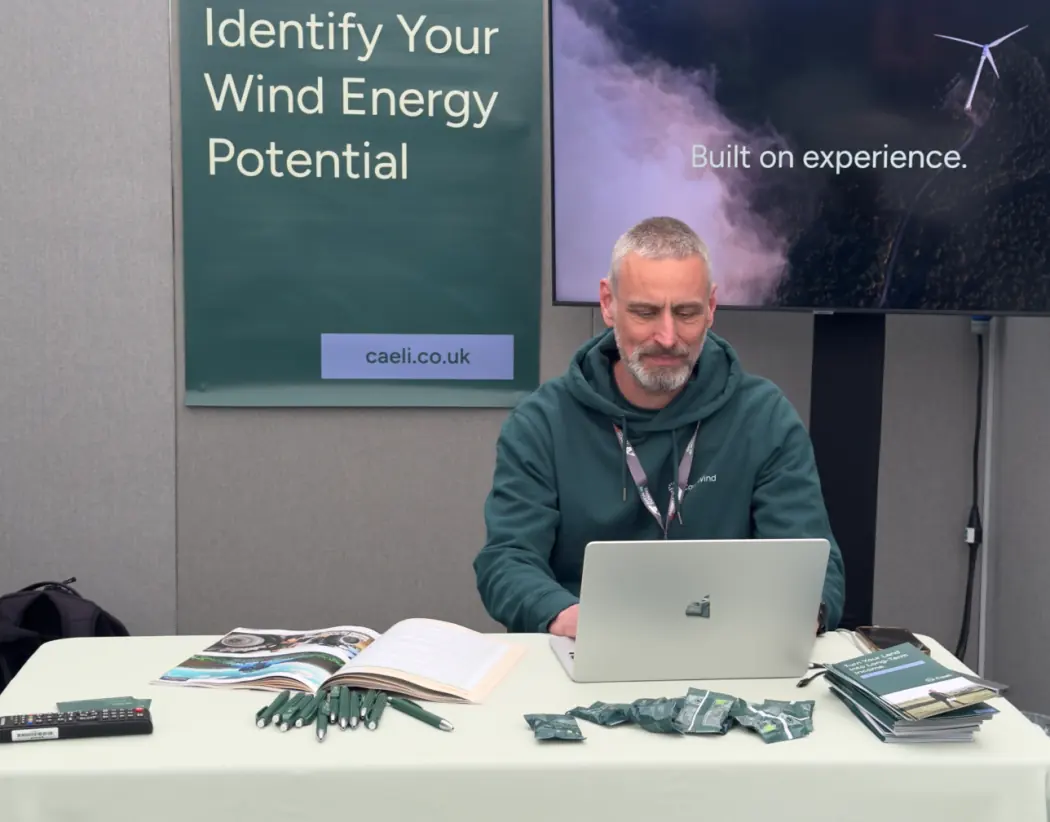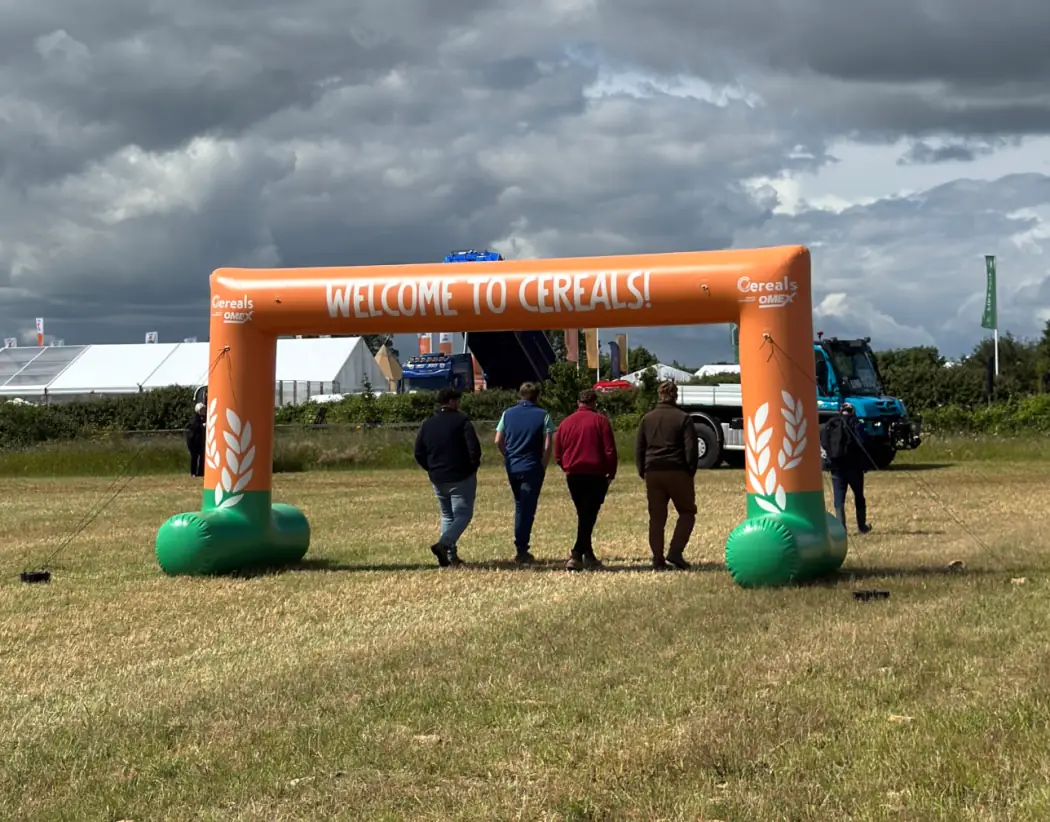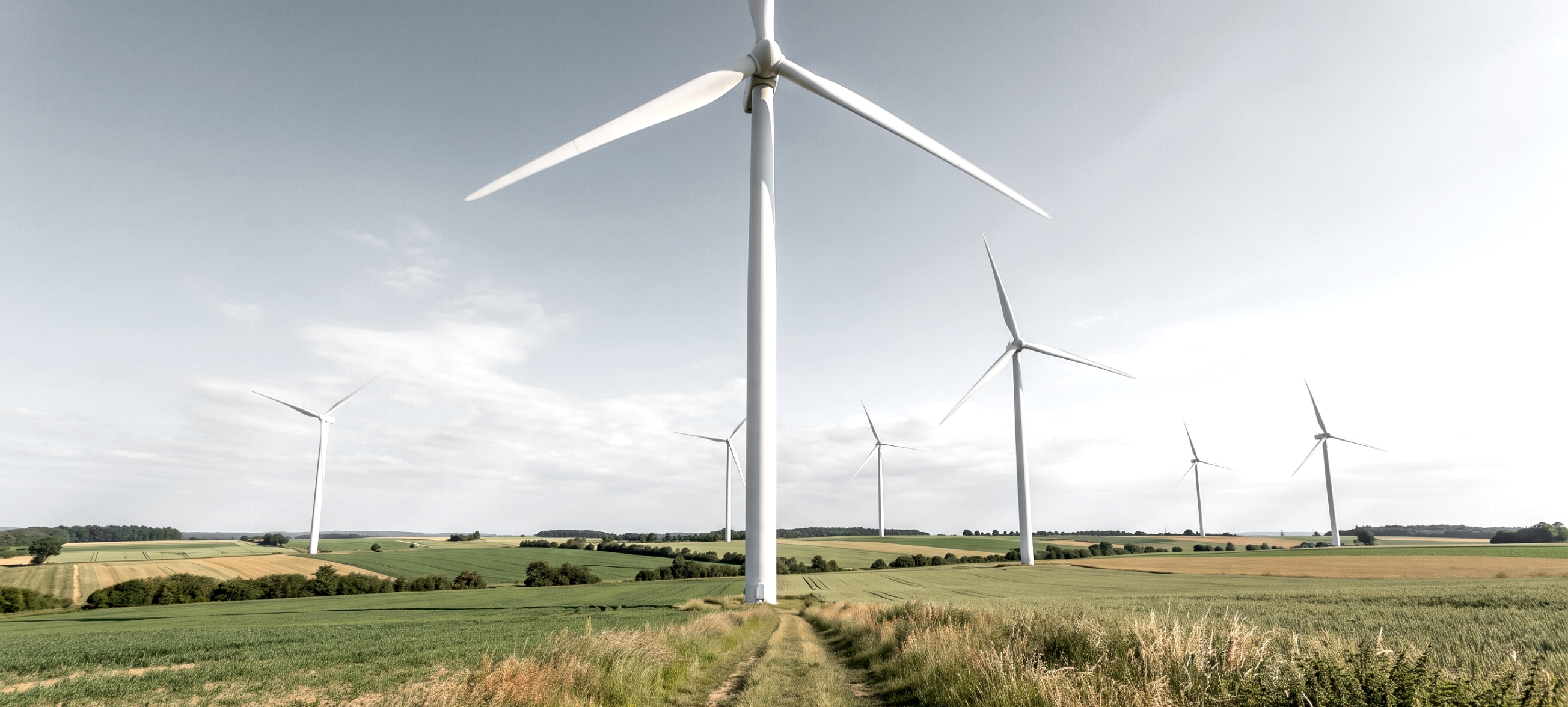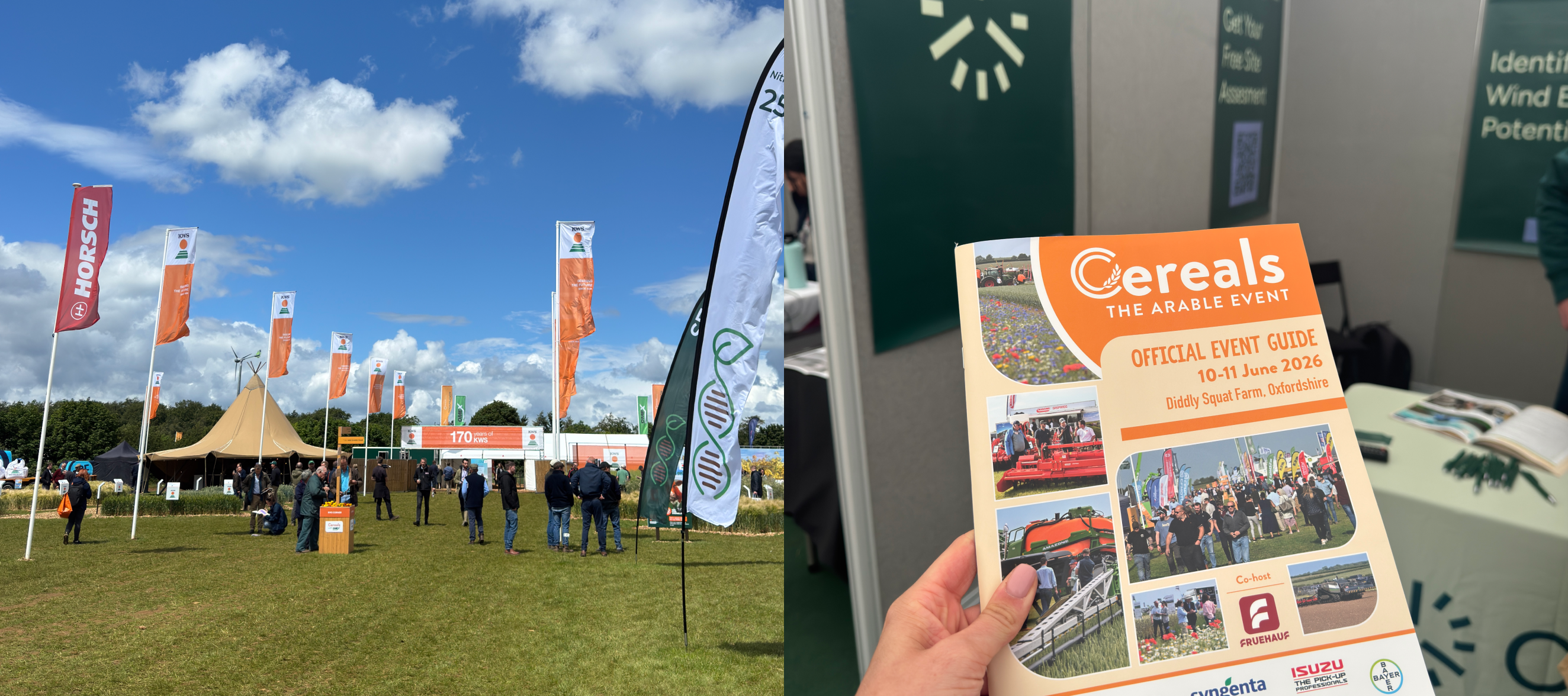
At Cereals this year, one thing was clear: onshore wind is back on the agenda for English farmers.
For us at Caeli, this confirmed what we are already seeing in the market. Onshore wind in England is moving again. But the opportunity is not defined by a wind resource map alone. For landowners, it is a multi-layered decision.
The real question is whether land, grid access, planning context, farming reality, neighbouring interests and route to market can come together in a way that creates a credible, realistic project.
That is where the next phase of onshore wind in England will be decided.
Onshore wind is becoming a farm business question
For many farmers, landowners and land agents, onshore wind is no longer a distant policy discussion. It is becoming part of the wider land-use and income conversation.
That matters at a time when many farm businesses are under pressure from rising costs, changing subsidy structures, volatile markets and the need to think carefully about long-term land value.
But onshore wind should not be treated as a simple additional income stream. A strong opportunity depends on much more than available land and good wind conditions. It depends on whether the site can be assessed properly from the beginning.
That means looking at land viability, grid access, planning context, land rights, environmental constraints, neighbouring landowners, tenants, farm operations and community engagement together – not in isolation.
In England, this is especially important because the market is still taking shape after years of very limited new onshore wind development. There is renewed momentum, but many questions still require expert judgement rather than simple black-and-white answers.